Showing posts with label One page profile. Show all posts

Sunday, 7 February 2016

How Simple Should A One Page Profile Be?

It was great to wake up this morning to find an article about the End Of Life Timeline Planner published in today's Sunday Mail.

Bringing ideas from person centred approaches developed over years by great teachers like John OBrien, Michael Smull and Helen Sanderson into the field of End Of Life Care is clearly receiving an immediate and warm response.

Personalisation in healthcare is an idea whose time has come, and person centred thinking is a key way to help deliver it.

What I would really like people to understand is that the values and approaches brought together in person centred thinking apply to all human beings: We all have gifts that we need to express, we all have hopes and fears, we all have things that are important to us, and we all need support. As a human being facing the end of my life, it is becoming important for me to make sure that people around me understand what makes good support for me, and this is the purpose of the planner.

Person Centred Thinking tools have been expressly designed to be simple things. If we can keep medical jargon out of the way, we can find ways to help people have important conversations about what matters to them. I've found Fink cards are brilliant as a way of generating rich and deep conversations about topics we might normally shy away from.
My worry about the timeline planner is that it is almost too complex, as it has no less than 25 fields to complete. Thankfully Helen Sanderson has shown us how it can be easily simplified further by making it into a number of consecutive one page profiles.

Of course not everybody agrees that simpler is better. Human beings are deeply complex creatures. Can we really sum up in one page the essence of what is human, when it took Tolstoy and Proust thousands of pages, and they still didn't fully explicate it? Is it actually an insult to the person to imagine that this is possible? One page about your whole life? One page about a precious human personality? Is that all?

I think it comes down to understanding what the purpose of a person centred thinking tool actually is:
It is a way of helping us gain choice and control over our lives in difficult situations, at times when it's very easy for the medical machine to grind over what really matters to us.


So we need simple ways to express what we feel is most important to us, and what is the very best support for us, complicated jargon is out. Having to fit everything into one page forces us to think about what is the very most important. It can be a harsh discipline. Michelle Livesley is somebody who has thought hard about what makes a one page profile work: she is clear that they need to be absolutely specific about what makes good support, and they need to be assertive: if something is very important to me, then it is not optional. It MUST happen.

So I'm arguing that the format of a good tool is very simple because keeping it simple helps the person and their family write it well.

And a one page profile is useless unless it transfers its message quickly and efficiently to care staff who may have little time to read through documentation. It has to be easy to read as well as easy to write.

It is a tool to be used practically in everyday situations at end of life. Making it easy for care staff to understand and use is just as important as helping the person and their family to write it. In my final days, I need my wishes to absolutely clear to everyone involved in my care, without ambiguity and vagueness. The simpler and clearer I make it, the less room for misinterpretation.

I've sat in committees that have tried to design good tools. "Have we covered xxx?" is the deadly question. Gradually tools grow like weeds from something beautifully simple practical and useful into tortured monsters of complexity. And every time a new layer of complexity is added, a little of who the person is is lost.

So I find simplicity beautiful for a reason. Simplicity is practical. Simplicity forces us to think of what is most important. Simplicity makes tools easier both for the person writing and the person reading. Simplicity is strong. As Leonardo Da Vinci said "Simplicity is the ultimate sophistication".


Tuesday, 19 January 2016

Maximising Choice and Control in End of Life Planning

Let's make it clear that I have no intention of dying for as long as possible into the future!

I intend to take every opportunity I can, despite my stage 4 metastatic bowel cancer to live and enjoy life. If a chance comes up for more chemo or a clinical trial, I'm going to take it.

However, I also have to be realistic about my condition and where it's likely to take me. I have quite an aggressive cancer that has mutated in unexpected ways. I may have years, in the worst case scenario it is just months.

Of course it's hard to pin down how fast or slow the process of my death will be. Prognoses are notoriously unreliable and should be treated with caution, as rough guidelines rather than carved into stone. Nobody should get hung up on prognoses, and if anything, they are a challenge to go out and live your life as best you can! It's already clear to me that good planning helps people live as well as possible until they die.

So I've been reading about and talking to people about 'End Of Life Planning', which I've found out involves a whole range of documents. I've been given packs full of quite daunting legalistic documents, that I feel I would need support from professionals to complete because of the difficult language they use. However, I also got hold of some great End Of Life 'Fink Cards' made by Sarah Russell and Helen Sanderson. These are a much easier way of starting a conversation.
An example of one of the Fink Cards

You can sit with your family and take turns to pull out a card, and then have a conversation about the question on the card. It works out you might only end up discussing two or three of the questions, as the conversations can quite quickly become in depth and cover lots of ground. The first time I tried this with my wife, we had been talking about the very first card for about 20 minutes, and it felt like we were really getting somewhere, then my phone rang: it was the hospital who needed me to come back in for another scan! I felt this showed how easily medical priorities can interrupt our personal priorities.

I have a history of working in Person Centred Planning and Thinking which is all about finding ways to enable the person to put their own most important wishes into the way they are supported, so that what is important to them actually happens in their lives, and they are supported in a way that is consistent with who they are. I was also pretty interested in the questions Atul Gawande has been asking about the things people really need to have conversations about at End Of Life, so that their wishes are truly heard.

I thought to myself, that, from my own experience, there must be simpler, more person centred ways of creating and capturing information from conversations about our wishes for the end of our lives. Simpler ways that would be more led by the person themselves, and involve their family and closest loved ones as the key decision makers and information gatherers.

My blogging about the possibilities of creating something useful at end of life was timely because it reached out to other people already thinking about this, including some of the area's leading academics,  hospice providers and innovators in health and social care. These people are keen to try out different formats to see what will work best for people.

So I jumped in by creating a grid with a few important questions down the left, and a timescale going across to see whether it would work for me:
Max Neill End Of Life Timeline Planner

In a way I see this as a very first attempt. I have lots to add and change. I also think the different headings might be tweaked and changed, although I do think they are 'open' enough to contain a lot of what is most important to people at end of life, and much of what Atul Gawande was keen to capture.

The biggest problem I can see with my format is that it has 25 boxes! The very best tools I've seen in Person Centred Thinking have many fewer, like Michael Smull's "Important To/Important For" or Helen Sanderson's One Page Profiles. Such a 'big' tool might be too challenging to attempt all in one go, and might be just as daunting as some of those legalistic documents.

I passed this grid over to Helen Sanderson, who worked on how it might work as a one page tool. She has taken it and done quite remarkable things to it and actually made it into a series of one pagers to reflect how things change over time. Here's a couple of examples:

1 page on my wishes: When I have months to live

One page on my wishes: When I have weeks to live

This kind of brilliant simplicity might offer people a much easier format for their discussions, which they could combine with conversation starters such as Fink Cards. I can see that I still need to do plenty of thinking, and add much more of my own detail in the different headings, but this may be made easier for me and my family and friends by using this cleaner, less crowded 'one page' approach.

So as far as I'm concerned this is a work in progress. I'd be interested in people's ideas about getting the questions and headings exactly right. A group of us (Helen Sanderson, Sarah Russell, Sharon Hudson and Philip Ball) kicked the various formats around and speculated about how they might be tried out and improved in a practical and invigorating online discussion.

Online fun


We'd love other people to get involved and 'crowdsource' ideas about how we can maximise the way we gather people's end of life wishes so that it works for people and can be led by them,  rather than being a 'top down' process dominated by the professionals.

Also Sarah Russell is going to blog soon about how these ideas for formats fit in with current research, legislation and best practice at end of life, and we will also be bringing the discussion to twitter so that lots more people can join in.

Watch this space as we'll soon be announcing the date for a "Twitchat". We want to maximise the way people can express their wishes for their end of life care, so the hashtag we'll be using for all these discussions is #maxeolc. A twitchat is a chance for anyone to join in!

I would be really pleased if readers of this blog would pitch in with your own experiences of good and bad end of life care, and with your own ideas of how we can create planning formats that really work for people.

I know your views and experiences will make a difference!


Tuesday, 5 January 2016

Sometimes Blogging Makes A Difference

Suddenly, as never before, my blogging is making a difference.

I've been interested in blogging for a few years now, and posted up lots of bits and pieces. I couldn't say that I've been a serious blogger however. I haven't posted often enough or on consistent topics enough to build a big following.


Up to now I've used my blog to share ideas and news as a bit of a dilettante. I've never seen it as a way of creating change. This assumption has been completely knocked sideways however with the reaction to my two most recent blogposts: Christmas in the Hospice and Atul Gawande on End Of Life. Suddenly blogging for me has surged into life. It's become something that is leading real people to take real action, in line with the hopeful title of my blog!

In those two posts the topics of my writing felt a little unsafe. It felt risky to write about the prospect of my own death, how I intend to prepare for it. How I intend to live as well for as long as possible with the people I love before and until my death happens.

I decided to be as open, honest and simple in my writing as I dared. I think people who read my blog appreciated this approach. I feel that this led to some major results:

First of all I noticed that the numbers of people reading the blogposts was unprecedented, people had started getting in touch, and sharing the posts on facebook and twitter. The stats for hits on my blogger account spiked dramatically. It's hard to express how the adrenaline can buzz at the sight of few dry numbers when you know these means hundreds of people are reading and sharing your writing!

I've since been privileged to be contacted by people living with cancer and their relatives who have got in touch to compare notes. I know from my own experience that there's nothing like making a connection with someone in a similar situation to make you feel less alone. I've had real inspiration from Ben Ashworth whose approach to his bowel cancer is no less than heroic, and by amazing coincidence lives just round the corner from me. I also appreciated the support I got from Vine House and from the Preston Gentle Approach to Cancer Group.

 I was also contacted within hours by the public relations person from St Catherine's hospice who has shared the blogpost on St Catherine's own website, which makes me feel truly honoured. We've been talking about how to share some of the messages in my post more widely: I'd like people to understand that hospices help not just in the last days of a person's life, but help people in the way they were helping me, such as helping people find ways to manage their pain. (I also got loads of other kinds of support while I was there, including some handy advice about benefits), more than 50 percent of people using the hospice's support are for similar reasons to mine.

I'm also interested in understanding what makes the best human support 'person centred'. I think many people at St Catherines showed real person centredness in how they worked with me and other patients: they showed their own humanity and recognised ours too in hundreds of little ways. My previous job as a person centred planning coordinator was about discovering what those hundreds of little ways are and helping more people be able to use them in care settings, so I feel really passionate about this.

 We're putting together a press release with more information about my visit to St Catherine's, and my whole cancer story to see whether this can help improve people's understanding of what hospices and palliative care are for and get across some of the other important messages about achieving the best kinds of human caring, which we hope will feature soon in the local press.

I was also delighted that local microblogger 'Blog Preston' was interested enough to share my post on that blog too!

I'm also delighted by the response from Helen Sanderson towards these posts. Helen is one of those unusual people who is incredibly skilled at taking ideas and making them into something real, that makes a real difference to real people. She has a genius for getting to the crux of what matters, of summarising and simplifying so that the tools and approaches she shares feel easy and natural for many people to use. The 'One Page Profile' is a brilliant example of this talent.

Helen also has a talent for bringing together wonderful creative passionate people with deep values and commitment. This means I'm absolutely blown away to see that my blog is part of what has inspired her to start working on a tool to gather together people's end of life wishes on one page. Already within a couple of days since I posted at least one hospice and several experts on end of life care have stepped forward via twitter to indicate that they want to be part of trialling such a tool and making it work: A simple tool that helps people facing the end of life gather together what really matters to them and ensures that this becomes part of their support.

Wouldn't it be wonderful if a tool like this becomes something that really helps many people express and share their end of life wishes, and then truly live well and die well?

I'm trying to grasp exactly why these two blogposts have precipitated such action and potential change. Partly it is because they are timely, on topics where people are already doing good thinking and have ideas they want to develop. I think however it is also because I am now delving into the well of my own lived experience. I'm writing about difficult times and difficult thoughts and trying not to shrink from expressing myself clearly and honestly, even if that's a little bit scary.

I intend to continue blogging in this vein, and I'll certainly try to do my part in helping St Catherine's,  Helen Sanderson and others with their work around End Of Life. If my prognosis after my last scan is correct, then I would like the experience of the last months of my own life to be genuinely useful to other people.

I wonder whether I can do this by writing not as an expert, but as a human being.

Thursday, 7 May 2015

My Bowel Cancer One Page Profile:

This was originally posted on the Connect4Life blog: http://connect4life.blogspot.co.uk/2015/05/one-page-profiles-for-long-term.html: thought I would share it here too!

One page profiles are a simple way that people with long term health conditions can tell our story and express our preferences.
They have a starkly simple format: They have just 3 questions:
  • What people like and admire about me.
  • What is important to me
  • How to support me well.
Max Neill, who works with Connect4Life as a community connector has just written a one page profile to share with his family, friends, workmates and health professionals involved in supporting him with his cancer.

He said "Last September I was diagnosed with bowel cancer and had an emergency operation followed by precautionary chemotherapy. In the last few weeks a scan revealed that despite the chemo, the cancer has metastasised, with new growths on my peritoneum and lymph. Obviously this means that I have a lot further to go on my cancer journey, but as well as being a cancer patient, I'm also a family man, a Connect4Life worker and someone who enjoys a game of Dungeons and Dragons!"

"I decided to write a one page profile for a few reasons. I thought it would be a good way to gather my thoughts together at a stressful time and express my wishes clearly. I'm going to see my oncologist again next week to discuss my options, and I wanted her to know that I want to do what I can to work towards a cure. I'll share it with people like my ostomy nurse and the district nurses who've been supporting me with my chemo, and the staff at the Rosemere Unit."

"I'm hoping that it will be a way to avoid having to answer the same questions over and over again!
I like the one page profile because it is so simple, yet it enables you to say so much. It avoids all the medical jargon, and it helps you have the important conversations you need to have at a time like this, both while you're making it, and while you're sharing it."

"It's too easy in a big busy healthcare system for your identity to be subsumed by your diagnosis. I want to use my one page profile so that who I am comes off the page, and I'm recognised as a person with my own priorities and my own hopes and fears. I think a tool like this would be useful to so many people, why shouldn't every cancer patient be helped to write a One Page Profile?"


You can find out more about One Page Profiles by following the links below:

This is a blog with one hundred examples of One Page Profiles being used in many different ways:
https://onepageprofiles.wordpress.com/

Here's a blog advocating the use of One Page Profiles with Older People living with cancer: http://opaalcopa.org.uk/tag/one-page-profiles/

Here's Amanda's One Page Profile written around her breast cancer: http://thinkaboutyourlifeandhealth.com/2013/06/28/using-one-page-profiles-to-direct-cancer-support-amandas-story/

The Learning Community for Person Centred Practices have shared many examples of One Page Profiles: http://www.learningcommunity.us/onepageprofiles.htm

Here's a blog showing how One Page Profiles can be used in personalising health services:
http://personalisinghealth.com/tag/one-page-profiles/

Think About Your Life offers a whole range of thinking resources to people living with cancer, including a template for a One Page Profile: http://www.thinkaboutyourlife.org/

You can also get in touch with Connect4Life!

Follow us on twitter: @C4LifeLancs

'Like' us on facebook: https://www.facebook.com/Connect4LifeLancs

Thursday, 20 November 2014

Tips for Getting Through Chemotherapy

Chemo-rocker
My bowel cancer surgery was conducted as an emergency, so I didn't have time to worry about it. I only really began to understand what had happened about three or four days after it was a fact.

Chemotherapy on the other hand, gives you plenty of time to worry! Better than worrying is preparation, so I've tried to approach my chemo in the best way for me. I've tried to condense this advice into 12 simple hints and tips which I've listed below.

I've often thought one of the most arrogant things you can do is to give people advice. Especially advice on life changing events like cancer and chemo. But then I looked around for advice on chemo, and didn't find enough of the kind I wanted. I wanted to hear from people who had gone through it and who knew some of the pitfalls.

There are some great blogs, tweeters and facebook groups out there if you're prepared to look for them, I think in these days when people are talking about 'empowering patients' we need to do more to connect together to give the patient's perspectives and experiences as loudly as those of the professionals. A key thing is that as someone facing a disease like cancer, you actually need to think about your whole life, and what your real key priorities are, as well as learning how to manage your life under your new circumstances, and this can be about a lot more than just the pure medical information you can get, which is important, but is really just part of the story. One useful website that really helps with this is "Think About Your Life" which helps you do exactly that.

One useful tool that will really help on that site is the 'One Page Profile', which you can use to tell people around you, whether they are health professionals, friends or family what is important to you and how to support you well. I'm spending a lot of time with District Nurses, Stoma Nurses and at appointments that eat up your week - a one page profile can be something that saves time during these meetings and lets these people know more about who you are and what your priorities are.
This bolus syringe and vacuum makes me look like one of the Ood!

Anyway at the risk of being arrogant, here's a list of my own tips that I'm following to help me get through my chemo. Not all will apply to you. You might like to tell me a few of your own.

1. Get in touch with other people going through the same thing. Read their experiences and learn from them. Don't expect that your experiences will be identical. There's a huge range of reactions to chemo. Some people have a really hard time, other people run marathons in between sessions and raise thousands of pounds for charity. Everyone is different. Don't get too scared by the worst horror stories, and don't feel that you have to be running marathons too. Work out a way of getting through that works for you in your life and situation. Peer support groups work for some people, because we gain strength and power from each other when we share our experiences in a positive way.

2. It's OK to feel like shit. I watched a video where one of the people said "It's all about your attitude, if you have a good attitude nothing can stop you". This is only partly true. Chemo will damage some of your healthy cells as well as some of your cancer cells. You will feel various kinds of discomfort. "Attitude" cannot prevent this, though it can affect how you feel about this. Cancer, chemo and the way the medical system is organised all take away a lot of the control we previously took for granted over our bodies. What we can control is how we react to this.

3. Mindfulness exercises might help: I've been attending mindfulness classes that have really helped me deal with some of the pain and discomfort. Exercises such as focussing on your breath, and returning to your breathing when you notice that your mind has been filling up with thoughts were particularly helpful during the insertion of my PICC line. Here a plastic tube is inserted into a vein and pushed up so that it can deliver the chemo right next to your heart. For someone with my imagination, it would be very easy to panic when thinking about this happening. Calming myself through this focus on breathing really helped me relax. There are lots of places that offer mindfulness these days, so look around for them. If you find that during your class you are invited to visualise yourself as a four-faced 12 armed blue faced sex god, maybe you've found a group that's going a little bit further than everyday mindfulness! (but hey, it might be fun!).

This is a pretty good book on mindfulness that avoids all the esoteric religious stuff, and that has some good exercises and a CD: http://www.amazon.co.uk/Mindfulness-practical-guide-finding-frantic/dp/074995308X/ref=sr_1_1/275-9958178-5278725?ie=UTF8&qid=1416486874&sr=8-1&keywords=mindfulness+a+practical+guide

4. Gather support from family, friends, work. Giving people an opportunity to help you in big or small ways benefits them as well as you! Some people do this naturally and informally, others might need more formal support through something like a Community Circle.

5. Get regular exercise. Find a way of getting exercise that works for you. I've been walking my step-daughters puppy, when I've been feeling up to it. It definitely does me good.

6. Drink plenty of fluids. Flush those drugs out of your liver as quickly as you can!

7. Look after your mouth. Brush your teeth and use mouthwash.

8. Be careful with cold air and cold drinks. I bought a bandana from a camping shop to put over my mouth when out in the cold.

9. Look after the skin on your hands and feet. The unit where I get my chemo gives out free handcream, so I start using this a couple of days before my chemo session and continue all the time the pump is in.

10. Keep an eye on your temperature. The big risk in chemo is 'Neutropenic Sepsis', which is where your immune system, weakened by the chemo becomes overwhelmed by bacteria that at other times would have been no threat to you. Get a thermometer. You'll be told to eat the same diet as a pregnant woman, avoiding soft cheese, pate and suchlike and to cook all your food really well. Wash your hands, stay away from people with colds and flu, No reason to take daft risks! If you do notice your temperature rising, don't hang around, anything over 37.5 celcius is an emergency. You should be given a number to call and a card to put in your wallet at the very least.

11. Give yourself treats. I've bought in cakes, chocolate drinks, sweets (especially jelly babies which thicken up the output into my stoma). I've had trips with my sons to the cinema. Some cancer charities offer complementary therapies like reiki, massage and art therapy, Find out what's available to you locally, and make the most of it. If anyone is caring for you, see if the same services are available to them. They deserve treats and support too!

12. Ask your doctors and nurses questions. Try to get as much control back as you can! One thing they don't tell you is that it's the awkward patients who argue and question their treatment that tend to have the best survival rates and outcomes, especially compared to people who meekly put up with whatever treatment the health system dishes out.

Please feel free to add your own hints and tips below! Let me know what worked best for you.

Tuesday, 29 July 2014

Portland Gathering 2014

This blog has recently had it's 10,000th visitor. That's not bad for a blog that I woefully neglect and update far too infrequently. I'm using this success to motivate me to write here more regularly.

I spent last week in Portland, for The Learning Community for Person Centered Practice's gathering in Portland Oregon. There's a good video that interviews some of the participants here:


I gave three presentations there. One was on the Justice for LB campaign, one was on writing really good One Page Profiles, and one was on the work of building community circles in the UK.

I chose these topics, because I felt they were the most important things happening in the world of person centred practices in the UK that the delegates at this conference in the US should hear about, for different reasons.

I felt it was vital for people to hear about Justice for LB, because it's a story that illustrates just how vital it is for services to listen properly to people and their families, and the potentially tragic consequences of failing to do this.

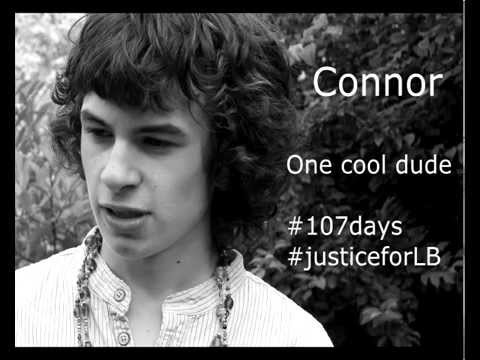
The family had tried to hold a person centred review for Connor Sparrowhawk (LB) at the Assessment and Treatment Unit. They wanted to share what was important to Connor (interesting activities, London Buses, Eddie Stobart lorries, artwork and much more) and what was important for Connor (the fact that his epilepsy was getting worse and the support he would need with this). The staff at the ATU had no time for this thinking however, because it was "not the Care Programme Approach" and did not take it seriously. Connor died a needless and avoidable death by drowning in the bath at the ATU, having presumably suffered an epileptic seizure while unsupervised in the bath. You can read more about the circumstances of his death in the Verita report published about it.

The people who came to this session were visibly moved by Connor's story. They told me that on occasions where this kind of thing happened in the US, the company involved would generally be put out of business, either by quality inspectors, or by the cost of the damages they would have to pay out.

The key issue was that the family had the answers all the time. They knew about the support Connor needed, and they knew that person centred approaches like the person centred review were the way to think together about, plan and deliver the support he needed. All that was needed was for the service to listen to Connor and his family.

"Good support starts and ends with listening. Listen to the person. Listen to the people who know the person best. Listen again. Ask questions, keep listening. When you finally think you’ve heard enough, you’re wrong. Listen more".

I've written previously in this blog about the Winterbourne View Concordat, Justice for LB, and how person centred approaches could be part of helping people get out of Assessment and Treatment Units and into the community.

I talked about One Page Profiles because they are proving to be such a brilliant way of introducing person centred change into individual people's lives, and at scale across services. There was really warm applause for the 100 One Page Profiles blog, which was seen as a real asset for person centred practitioners, both as a source of stories, a repository of great examples of the best one page profiles, and as an illustration of the breadth of applications for this person centred thinking tool. Michael Smull told me personally that he considered Helen Sanderson's work on One Page Profiles to be just as brilliant as anything he himself had ever come up with, "and that's speaking as someone with an ego the size of mine".

I spoke about Community Circles because this is an idea with immense potential for the future. We've looked at ways we can apply circles of support at scale, by making them simpler to facilitate and by offering really good support to facilitators. We've also looked at really good applications for circles: in care homes for the elderly, at the end of life with hospices, and their use by faith communities with people who have become isolated because of disability, ill health or circumstances.

The board of the TLCPCP later agreed that the principles that make circles work, shared in my presentation could potentially also be used as principles with which the Learning Community itself could reframe itself as a growing international community of practice; we could become a global circle sharing our learning together. This is really exciting news, and something I'll be thinking and talking about a lot more in the months to come!

A really big highlight of the Gathering for me was meeting Angela Amado, a leading figure in the field of creating inclusive connected communities, for example I really admire this manual on connecting people with disabilities with their local communities. It was great to tell her about some of what Connect4Life has been doing in central Lancashire.

Overall the gathering was a great opportunity to meet a room packed full of real leaders, ideas people and creative change makers: people full of energy and experience, with a determination to change the system, who have certainly boosted me and made me feel optimistic about the prospects for helping many more people gain choice and control in their lives.

Sunday, 1 December 2013

Michael Smull on One Page Profiles

Michael Smull speaking in Texas
Michael Smull sent out the following message to people on the Learning Community for Person Centred Practices general mailing list today, he's given permission for us to share it.

"In our efforts to support people in have lives of their own choosing within their communities we have developed an array of practices, skills, and tools. Notable among them are 1 page profiles.  They are both powerful and remarkably useful.  They have made significant differences in the lives of people and have been a critical part of making positive changes in practices.  One page profiles are not meant to be a complete picture of a person, rather they are a snapshot that introduces the reader to the person, outlines what matters most to that person and gives the top tips for support.  Part of their power is in their brevity and that, done well, they are visually attractive.  They are a powerful “tool” in changing how people are perceived and supported.  But they are not powerful simply because they exist but because of their impact.  People who use services, their families, and those who support them have given us story after story about how they have helped in their efforts.  For some people part of what was powerful was the learning that that takes place in development.  For many others it is how effective they are in introducing someone and advocating for them. 

 
A test for something being person centered is that it works for humans.  If it just works for disability it is clinical.  When we apply this test for 1 page profiles we see that can be helpful in a variety of human circumstances.  My 1 page profile as a trainer (on the learning community’s website) is very helpful for those asking me to do training.  With teams, I have facilitated a process for them to develop 1 page profiles on each other and team members find that they are then more effective in working together.
 
There are so many stories about the efficacy of 1 page profiles from so many places that I find it difficult that anyone paying attention can criticize them as ineffective. This is not to say that they cannot be poorly done or badly used.  They are a means not an end. They are not a “magic bullet”, they are not the only thing that needs to be done to change practices, but they are key part of what I teach and coach.   Criticism of those done badly or done just to be “trendy” is justified and useful.  Broad criticism flies in the face of the reality of their impact.  But that criticism has occurred. The criticism I have seen suggests that we are promoting  one page profiles as an end.  Yet if you read the stories associated with the profiles you see that it is how it was used not just that it exists.
 
Because 1 page profiles are being criticized we need more stories.  If you could take a few moments and share your learning it would be very helpful.  Clearly we want stories that illustrate the breadth and power of their use.  But, because we are learning community, we also want stories that illustrate your learning in what was required to make them useful.
 
Thank you.
 
Michael"

Saturday, 30 November 2013

One Page Profiles: Just Garnish?


One page profiles are a simple person centred thinking tool that sum up what people like and admire about a person, what's important to that person, and the best ways to support that person on a single sheet of paper. Their simplicity and practicality means that they are becoming very popular, they are an easy first step in the person-centred journey. The growing uptake of these tools however  has inevitably meant that they have also invited criticism, criticism which gives us an opportunity to think more deeply about the best ways to use one page profiles, their benefits and their limits.

Last week Simon Duffy tweeted what looks like a quote from Peter Kinsella at a big everyday living conference "One Page Profiles are just garnish, they make no difference".

This is a 'black swan' statement. Find one black swan and you prove that the statement 'there is no such thing as a black swan' is pretty unfounded.

As a black swan statement, all that's required to prove that particular tweet wrong is one example of a One Page Profile that has made a difference for somebody. And of course there are many more than just one example, all kinds of examples and stories of one page profiles that made a difference are posted on the '100 One Page Profiles' blog. Stories are statistics with souls, and the list of stories on that blog is only growing longer and richer.

Sweeping statements that dismiss One Page Profiles and other pieces of person centred thinking as 'just garnish' are therefore pretty unhelpful and easily disproved, though to be fair to Simon and Peter, maybe the statement would have been phrased better if it was not constrained by the 140 character limit set by twitter.
 A more helpful statement would have been 'some one page profiles are just garnish and make no difference'. We could then investigate what makes the difference between one page profiles that achieve change in people's lives, and those that don't, so that we can work to create the conditions where more of the first kind are produced. This is the purpose of the Learning Community for Person Centred Practices, which develops person centred thinking tools, shares them and then gathers learning about the best ways to use them to ensure that people win more choice and control in their lives. You can also find TLCPCP on facebook and twitter.

There are however some more thoughtful criticisms of One Page Profiles out there that we need to consider seriously because they will help us work better at increasing choice and control in people's lives. Below I'm listing some of these criticisms, and giving what I hope are some  equally thoughtful and constructive responses, the beginning of a respectful learning conversation:

1.    "One Page Profiles are only for disabled people, so having one labels you as disabled"


We would argue that one page profiles have many many uses, with applications for many diverse people, including non-disabled people and situations that are nothing to do with health or social care.
 
On the 100 One Page Profiles website, there are examples of one page profiles used in mainstream schools, in a couple's birthing plan, to find a nursery, to help people know how to speak to a recently bereaved woman, as a way of applying for a job, as a method that an employer can support their staff. People are inventing new ways to use one page profiles in almost every aspect of their lives.
 
We also use one page profiles in our own work as trainers and planners, we share our own profiles with the people we serve, and their families before we ask them to share anything with us. We see one page profiles as being useful in many different people's lives and work, and not as something exclusively for disabled people.
 
Because they increase the amount of choice and control in people's lives however, we're do find one page profiles particularly useful in the lives of people who have less choice and control in their lives as a consequence of society's attitude to the presence of ill health or disability.


2.    We shouldn't use any predetermined tools or scripts. If we properly listen to people we can improvise and adapt our approaches in a way that suits that person.


There are a few, absolutely brilliant and charismatic facilitators out there who have the ability to facilitate person centred thinking and practice 'on the hoof'.

The rest of us however don't share this level of confidence in our abilities, many of us may be new, inexperienced and nervous, and therefore find tools that prompt and structure our discussions in a direction that inquires into a person's gifts and skills and that seeks out what really matters to them very useful.

 Having such simple tools means many more people can practice and experience person centred thinking. They democratise the practice rather than leaving it in the hands of a small and gifted elite, and mean that many more people get to benefit from more person-centred support in their lives.

 We also hope One Page Profiles will replace those much more complex and negative tools that services traditionally (and many still currently) use. Assessments and approaches that focus on what a person can't do, that inquire into people's incapacities rather than their capacities, that consider health and safety without also considering what really matters to a person and which implicitly regard the person as a problem to be solved are doing great damage to people, saddle them with negative reputations, and lead us to support them in paternalistic and overprotective ways.
 
Replacing such segregating deficit model tools with simple tools that focus on gifts and capacities and on connecting a person into the community is part of shifting the whole culture of health and social care toward a different way of regarding people.

 Of course we must endeavour when we use one page profiles, to do so in a way that respects the person's preferred methods of communication to be sensitive to what really matters to that person. We need to keep learning about what helps this work best.


3.    Sometimes One Page Profiles are just superficial lists of likes and dislikes.


Like any tool, there are useful ways of using them and ways that are less useful. I don't prove that my screwdriver is useless just because my shelves fall down, I prove that I need some help and advice to use my tools better.

 Using a one page profile well, to structure a meaningful conversation and to delvier change, requires a real intention to discover what's strong and valuable about the person, and a determination to find ways to support that person that make sense for the person, as well as a genuine will to act on whatever is learned.
 
To be able to write one page profiles with others, we therefore require that people have first written and used one page profiles themselves in their own lives, to gain an appreciation of their potential to make a difference when used well, and to ensure that we don't ask people questions that we have not been prepared to answer ourselves.


4.    Introducing One Page Profiles En Masse would lead to tickbox planning.

This is a real risk if one page profiles are implemented by people or systems that don’t care about one page profiles or the people they are supposed to be supporting, and don’t endeavour to train people well in how to use them. Such people implement changes to 'meet targets' without thinking more deeply about the purpose of such changes.
 
In such a scenario, we’d be likely to see plans that are just superficial lists of likes and dislikes. This would be far less harmful than continuing the implementation of tools that focus on deficits, but would not lead to the change we wish to see. Just like any other approach, one page profiles rely on genuine intent to listen well and to act on what is learned, and if change is to happen this intent must be reflected at every level.
 
Where people really are stuck in structures and systems so deeply imbued with this target-driven cynicism, then measures like personal budgets that enable people to seek support from outside such systems are going to be helpful. Good person centred thinking helps with good support planning and helps people use their personal budgets most effectively.
 
We'd also advocate other methods of cultural change within these structures, that shift the conversation away from targets toward the meaning and purpose of the work, and toward practical ways of bringing about system change.


5.    There are some things we don't wish to share about ourselves

Don’t share those things then!
 
It’s up to the person what they choose to share in their one page profile. It helps to think about what the purpose of the one page profile is, and therefore who needs to see it, as well as what they need to know and do to support you well. These questions help focus us on what needs to be included in a one page profile, and which people it would be shown to.


6.    One Page Profiles are not a panacea

One page profiles will not solve all the problems inherent in health and social care or in our disablist society. If you’re looking for something that does, keep working hard! We’re right with you! In the meantime people still need better lives that mean something to them, and better supports delivered in a way that makes sense to them. In an imperfect and confusing system and a society rife with unjust power and resource distribution, every tiny bit of choice and control we can win back in our lives is precious.


7.    One Page Profiles could become a substitute for doing more detailed person centred planning.


There’s definitely a risk that someone could write a one page profile and say “And now my work here is done”. However as we explain in this paper, the one page profile is just a first step in the person centred journey. There are many other tools that do equally useful jobs: communication charts, staff matching tools, tools that help us explain to staff their different roles and responsibilities, learning tools, community connecting tools, tools that help us move toward our dreams and avoid our nightmares. These tools are there to try out and experiment with. Find ways to use them that make sense to you. Share what you're learning while you do!
 
Please don’t stop thinking together just because you’ve completed a one page profile! There is so much more to discover, and it could be great fun discovering it!