The 1st June 2014 is an important date. It was the date that was set for significant improvements in the lives of people housed in Assessment and Treatment Units by the Winterbourne Concordat. For most this was meant to have been resettlement back into places in their own communities, for the rest, clear plans for resettlement were meant to have been written. The statistics coming out however show that in fact the reverse has happened. People are still staying in ATUs for long periods, the numbers in ATUs are increasing. Most people do not have resettlement plans.
What follows is not in my usual blogging style. It was written as an essay for the Management Unit of my Masters degree, so it's in an academic style packed with references. It's also full of management theories which I had to include to demonstrate knowledge. I'm quite sceptical about a lot of management theories - sometimes they are blindingly obvious, sometimes they are gnomic, occasionally they provide brilliant insights. As I point out in the essay, knowing these theories has not helped the people who signed the concordat to actually deliver its promises, something extra is needed.
I thought about taking a lot of the academic stuff out before I blogged it, but I couldn't find a way of doing this without fundamentally changing the meaning of what I've written, so I have to apologise in advance for the inaccessible style.
The case of Connor Sparrowhawk is mentioned in the essay, because I felt it was directly relevant to the Winterbourne Concordat. I shared the essay a few days ago with Connor's Mum, and she is OK with me sharing it.
Is there a way forward for the Winterbourne Concordat?
One of the most problematic recent issues for government and local authorities has been around their response to the Winterbourne View Scandal. In May 2011, the BBC’s Panorama programme broadcast shocking undercover footage of serious abuse at an Assessment and Treatment Unit (ATU) (BBC 2011), this was followed over a year later by another programme showing that the same serious failings still existed (BBC 2012).
The furore around Winterbourne (and also Mid-Staffordshire) also led to the resignation of several CQC leaders following criticisms of their ‘light touch’ approach to regulation, and alleged unwillingness to be critical of the NHS (Ramesh and Muir 2013).
In response to the outrage around Winterbourne, Care and Support Minister Norman Lamb vowed that by June 2014, people would be placed in small local community based facilities, rather than being sent hundreds of miles to inappropriate placements (Samuel 2013). This policy was a key feature of the Winterbourne View Concordat (DOH 2012), the headline commitment being “Health and care commissioners will review all current hospital placements and support everyone inappropriately placed in hospital to move to community-based support as quickly as possible and no later than 1 June 2014”.
This concordat was signed by directors of Adult Social Care and NHS Clinical Commissioners along with many other leading bodies: over 50 in total.
Impacts on people with learning disabilities and their families:
The key impacts on people with learning disabilities and their families of the successful implementation of the concordat would have been that people with learning disabilities and challenging behaviour would find locally available services to meet their needs, staffed by well trained people. Those still on ATUs would all have discharge plans, and the changes would “lead to a rapid reduction in hospital placements for this group of people by 1 June 2014” (DOH 2012 p5). Long stays in hospital would not be tolerated as “a hospital is not a home” (ibid p5), and there would be “zero tolerance for abuse and neglect” (p5).
This contrasts markedly with the current situation revealed by the Learning disability census which shows that two thirds of the 3250 people on Assessment and Treatment Units are being given large doses of anti-psychotic drugs, and over half being subject to restraint, seclusion, physical abuse or self harm (HSCIC 2104). 74% do not have a plan to return home (FPLD 2014), and the number housed in ATUs have actually INCREASED since the signing of the Concordat.
The report also revealed the extremely high cost of living in such miserable conditions; between £1500 and £4500 a week, with 10% costing even more than this (Parton 2014). Chris Hatton of CEDR estimates that the total cost per annum of housing 3250 people at these rates is over 1/3 of a £billion, and an incalculable cost to the wellbeing of the individuals concerned and their families (Hatton 2014a).
The stark reality of what this means to people and their families was revealed by the report into the preventable death of Connor Sparrowhawk, who drowned while unsupervised in a bath in an ATU. (Hussein and Hyde-Bales 2014) This report found that staff at the unit did not understand person centred planning, and that despite the high cost and high number of staff, the risk around his epilepsy was not properly assessed and the procedures in place were not adequate (ibid). Connor’s family report that they were made to feel unwelcome on the unit, as if they were interfering, and that their concerns about his level of activity and his epilepsy were not properly listened to. (BBC Radio 4 2014)
Impacts for Managers Commissioners and Providers:
Other key changes committed to in the concordat include:
• A strategy to reform the current arrangements for the assessment of special educational needs
• Joint commissioning between the NHS and Social Services locally
• Transition planning starting in childhood and continuing up to the age of 25
• Improvements in training and support for staff
• Unannounced CQC inspections
• Six monthly healthchecks
• Involving families and people with challenging behaviour in the commissioning of services and gathering feedback on their experience
Changes for organisations implied by the concordat obviously imply the strategic redirecting of that £1/3bn from funding places at ATUs to funding local community based facilities. This requires a very different approach from those commissioning these places, and may involve upfront investment in developing these new facilities. Similarly, the new approach to transition requires fundamental changes in the culture and practices of local organisations, breaking down barriers between children’s and adult services. Transition is a perennial issue, with very similar ideas for change included in Valuing People (2001), the difficulty in overcoming these barriers is evidenced by the repetitiveness of calls to break them down.
Managers at ATU’s would need to begin to ensure that every resident has a discharge plan, and actively work to reduce the numbers resident in ATUs. This is problematic, as there is no rational incentive for these institutions to shrink themselves.
Managers and commissioners at local authorities and in the NHS will need to improve the way they involve and engage families. This could be achieved through coproduction approaches similar to ‘Working Together for Change’ where people that use services and their families work together with providers and commissioners to design and implement strategic change (Bennett and Sanderson 2009).
Implementing such engagement programmes and other ‘localism’ measures is made more difficult when government austerity measures have impacted significantly on local government finances (Lowndes and Pratchett 2012), not least because such engagement is likely to require time and money investing into it, both into engagement workers in local commissioning bodies, and into carers and self-advocacy groups in the voluntary sector, as well as buy in from leadership for it to be more than tokenistic (McCabe 2010).
Local authority and NHS Managers are also instructed by the Concordat, and other government policies, that they need to be working in a much more integrated way, with pooled budgets and local collaboration through Health and Wellbeing Boards (Lamb 2013). There is a long history of attempts to integrate Health and Social Care, and results up to recently have been disappointing, Wistow (2012) argues that this is because the NHS has a culture that tends toward national uniformity, while local authorities exist in situations of local diversity. Any integration has occurred in peripheral functions, rather than core provision. Changing this requires deep cultural change in both sectors.
Applying Management and Leadership Theories to the Changes Advocated by the Concordat
One big obstacle to the implementation of the Winterbourne Concordat may be that it has coincided with a major restructuring of the NHS, and in the context of increasing complexity of commissioning within it (Goodwin 2011). Bruce Tuckman describes the stages of team effectiveness as ‘forming, norming, storming and performing’ (Tuckman and Jensen 1977). In the case of the NHS it has been formed and reformed by successive governments, and the current reforms have been particularly drastic, and while it was hoped the new Clinical Commissioning Groups (CCGs) would have geographical boundaries contiguous with those of local authorities, in many places it has not worked out like that on the ground. (Coleman et al 2014). Reorganisation has led to a period of instability during the forming and norming period, while people work out who is who in the system, and who is responsible for what.
It may be now that the new system has “bedded in” that progress on the Concordat becomes easier, McCafferty et al (2013) believe that the new organisations are likely to be receptive to implementing policies, providing they are clear, coherent, achievable and there is buy in from stakeholders.
Kotter’s approach (1996) to change may be useful here. He argues that 70% of attempts to implement significant change in organisations fail, and puts forward eight stages. The first three are to establish a
sense of urgency, to create
a coalition to guide progress and to
create a vision. On paper this was there in the Concordat with that ambitious target to achieve significant changes in numbers incarcerated in ATUs by June 2014, and with the signatures of leaders of all the most powerful institutions in Health and Social Care. The abject failure to progress implies that these commitments were not taken as seriously by the signatories as the wording of the Concordat suggests, with Lamb admitting “it’s business as usual in too many places” (Wiggins 2014).
The next steps are
communicating the vision, and
empowering broad based action, however the disruption caused by austerity measures and significant reorganisation in the field seem to have cut across this empowerment to find the funding to create new local community based provision. Bill Mumford, new director of the Winterbourne Joint Improvement Programme pointed out the lack of clarity in the vision: “Nobody defined what ‘appropriate’ was, and nobody quite understood what the numbers were.” (ibid) There also seems to be a paucity of
‘short term wins’, the sixth of Kotter’s stages leading to the programme being branded “hopeless” (ibid). Lamb has vowed that he is “more determined to see this through” which corresponds to stage 7: ‘
never let up’, but the total lack of progress means that there are no changes to be incorporated into the culture.
The sheer number of stakeholders named in the Concordat (over 50) creates a “diffusion of responsibility” (Wallach and Kogan 1964, Leary and Forsyth 1987) where individuals are less likely to feel accountable for an action or inaction due to the presence of a number of others and due to the lack of clearly assigned responsibility, this effect, similar to the ‘bystander effect’ (Darley and Latane 1968) noticed when people fail to come to someone else’s aid increases in conditions where the victim is unknown to members of the group. The social and emotional distance between people with learning disabilities and their families and carers, and the powerful people charged with leading health and social care could thus be a key factor in accounting for this lack of action. Chris Hatton (2014b) suggests that similar bystander apathy was a factor in the death of Connor Sparrowhawk on a well-staffed ATU. It could be argued that overcoming this apathy therefore requires the finding of ways of reducing this social and emotional distance, so that powerful leaders feel some personal connection to people in the ATUs and their families, as well as assigning to them a clearer personal responsibility to address the situation.
Narratives and storytelling are one way of bringing about organisational change (Boyce 1996, Hurwitz, Greenhalgh and Skultan 2008, Maas 2012). Well told stories that bring home the personality and individuality of people in the ATU, like the story of Connor Sparrowhawk being told by his mother and a coalition of his allies (Ryan 2014, #107Days 2014) could serve to begin to bring home some of this understanding if they are shared throughout the sector.
A serious approach to coproduction is therefore needed, that brings together people that use services, their families and carers and key local decision makers (Durose et al 2013) so that they can share their narratives in a way similar to that suggested by Downing (2005) where entrepreneurs and stakeholders tell stories together and make sense together is another way of beginning to address this distance.

Figure 1. shows a ‘Forcefield Analysis’ (Lewin 1943) of some of the factors promoting towards the desired goals in the Winterbourne Concordat, and of the factors that are creating resistance to this change. Leaders use the forcefield analysis to think about how they can enhance the factors promoting change, and weaken those resisting change.
In this case the factors resisting change seem mighty. However there is also a deeper cultural shift occurring: expectations are very different today from what they were 30 years ago, and it is the contrast between community based provision, self-directed support and the lives people are achieving through person centred approaches and the lifestyle endured by people on ATUs that throws this situation into sharp relief.
To paraphrase Thompson (1967):The environment is changing, and therefore so should the company. The cultural change in wider society, towards people insisting on more choice and control in their own lives and away from deference to authorities and experts that are rapidly discrediting themselves needs be reflected deeply in the culture of services. “Culture eats strategy for breakfast” (Drucker cited by Braun 2013).
However the 3000+ people in ATUs and their families are unlikely to wish to wait for small iterative accretions of cultural change to reach a ‘tipping point’ (Gladwell 2000), where the ATU and its current practices are simply no longer acceptable in our society.
Bringing about the change envisaged by the Concordat given it’s poor performance so far requires the increased use of cultural and change catalysts in Health and Social Care organisations. For the concordat to succeed, a fundamental shift in power relations in Health and Social care needs to occur, and so far the attempts to dismantle the Master’s house with the master’s tools (Lorde 1984) have failed abjectly.
Approaches for Personal and Strategic Change:
A strategy to bring about change then needs to begin by looking at the strategies attempted by families like Connor Sparrowhawk’s themselves. They attempted to hold a person centred review around Connor at the ATU, which at the time the professionals there found confusing and alien to their practice (Hussein and Hyde-Bales 2014). Holding a series of person centred reviews is part of the first stage of ‘Working Together for Change’ (WTfC) (Bennett and Sanderson 2009) a coproductive change process that brings each element of the system together, including people, families, providers and commissioners to think about how to achieve strategic change. This effect of bringing elements of the ‘whole system’ around a single person is deeply powerful as it reveals so starkly the change that needs to happen. The rich discussions held at such a review help turn grey statistics into colourful stories about real personalities.
Given that the average cost of a week in an ATU is £3000 - £4000 (FPLD 2014) the resources are there for each person in an ATU to have a person centred review. This could involve the people who commissioned their place at the ATU, along with family, friends, advocates and others who know the person well.
A person centred review has 7 questions, including “Questions to Answer, Issues to Resolve” (Sanderson and Mathieson 2004) the key issue to consider here would be “what would it take for this person to live in their own community”, and the answers to this question used to devise the resettlement plan demanded by the Concordat.
For some people, a ‘Community Circle’/Circle of Support (Sanderson, Carr and Neill 2013) approach might well be an appropriate way of mobilising the thinking and action necessary for a resettlement. A person centred review could be the starting point for the formation of such a circle.
Where leaving the ATU immediately seems impossible, the other questions in the person centred review: what’s important to me now? What’s important to me in the future? What helps keep me healthy and safe? What’s Working, and What’s Not Working? can be used to involve families and allies in improving the day to day support of their loved ones.
To overcome the effects of diffusion of responsibility, each person in an ATU should have a named person with the necessary authority from the commissioning agency who is personally responsible and accountable for ensuring this happens. This may require some upfront allocation of resources, but this is justified by the potential improvements in the life of the person, not to mention potential savings on the high cost of ATU treatment.
Similar work needs to be done with people currently living in the community who are at risk of being moved to an ATU, particularly with young people in transition.
Each authority could then bring together the rich person centred information gathered at these Person Centred Reviews for the next stage of the WTfC process; a coproduction session which brings together self-advocates, families, providers and commissioners to think together about the issues raised.
Doing this around the question “What would it take for us to bring these people back home?” could focus local people and agencies on the task of creating adequate local provision.
Processes like the ‘5 whys’ devised by Sakichi Toyota as a method of root-cause analysis (NHSIII 2008) which are used in WTfC will help these local coproduction efforts get to the deep rooted reasons why adequate local provision and skills mix for the people housed in out of area ATUs is either not present or has not been used, and make action plans to address these reasons.
Another key outcome of such coproductive work would be the development and deepening of productive relationships and partnerships, as local commissioners, providers, self advocates and families work together on delivering good lives individually through person centred approaches, and more strategic level 2 and 3 change through person centred coproduction techniques such as WTfC.
Conclusions:
Kotter (1995) has told us that the majority of big organisational change efforts fail. The Winterbourne Concordat’s first 18 months makes it appear likely to be one of these failures. Leadership and Management Theories give us clues about how to address this, but I think it likely that 90% of those powerful people who put their signatures to that concordat are well-versed in leadership theory; learning to be articulate in such management and leadership discourses will have been a requirement for attaining their current senior positions. This knowledge has not however enabled them or their organisations to deliver on the targets they signed up to.
Bennis (1989) argues that leaders tend to reflect and defend the culture that put them into their positions of leadership, while real innovation requires people to dissent and “thumb their noses” at the “way we do things round here”. The experience of the survivors of Winterbourne, and of Connor Sparrowhawk, along with the backward movement on the Winterbourne Concordat suggest that current structures and leaders in health and social care in this area are still failing to involve and engage people in their own support, and to become partners in the strategic direction of services. Radical person-centred action is needed to involve those who wish to deliver change, particularly those with a personal stake, who understand it is vital for their lives, in the strategic direction and change processes of the services intended to support them.
References
BBC (2011) Undercover care; The abuse exposed. Panorama 31st May
BBC (2012) The hospital that stopped caring. Panorama 4th November
Bennis W. (1989) Why
Leaders Can’t Lead. Los Angeles; Jossey Bass
Bennett S. Sanderson H. (2009) Working Together for Change: Using Person-Centred Information in
Commissioning. London; Department of Health.
Boyce M.E. (1996) Organizational story and storytelling: a
critical review, Journal of
Organizational Change Management 9(5) pp 5 – 26
Darley J. M.
Latané B. (1968). Bystander intervention in emergencies: diffusion of
responsibility. Journal of Personality
and Social Psychology 8 pp
377-383.
DOH (2001) Valuing
People. London; Department of Health
Downing S. (2005) The Social Construction of
Entrepreneurship: Narrative and Dramatic Processes in the Coproduction of
Organizations and Identities. Entrepreneurship
Theory and Practice 29(2) pp 185
– 204
Gladwell M. (2000) The Tipping Point; How Little Things Can
Make a Big Difference, New York; Little Brown.
Hatton C. (2014a) Tweet by @chrishattoncedr 7.29am 1st May
[ONLINE] available from:
https://twitter.com/chrishattoncedr/status/461875041169571840 [accessed
10/5/2014]
Hurwitz B. Greenhalgh T. Skultans V. (2008) The role of
stories and storytelling in organisational change efforts; A field study of an
emerging ‘Community of Practice’ within the UK National Health Service. IN Paul
Bate (Ed) Narrative Research in Health and Illness. London; Blackwell pp 325 -
348
Hussein, T. Hyde-Bales K. (2014) Independent Investigation Into the Death of CS: A Report for Southern
Health NHS Foundation Trust. London; Verita
Kotter J.P. (1996) Leading Change. Harvard; Harvard Business
Press.
Lewin K. (1943). Defining the "Field at a Given
Time." Psychological Review. 50:
pp 292–310. Republished in Resolving
Social Conflicts & Field Theory in Social Science, Washington, D.C.:
American Psychological Association, 1997.
Lorde A. (1984) The Master’s Tools Will Never Dismantle the
Master’s House, Sister Outsider: Essays
and Speeches by Audre Lorde Berkeley, CA: Crossing Press. Pp 110-114.
Lowndes V. Pratchett L. (2012) Local governance under the
coalition government; austerity, localism and the ‘Big Society’. Local Government Studies 38(1) pp 21 – 40.
Maas A. (2012) Living storytelling as an impetus for
organisational change: Towards connective observing and writing. Narrative Works; Issues, Investigations and Interventions 2(1) pp150 - 169
McCabe A. (2010) Below the radar in a Big Society?
Reflections on community engagement, empowerment and social action in a
changing policy context. Third Sector
Research Centre Working Paper 51. Birmingham; TSRC.
McCafferty S. Bate A. Finch T. McGovern T. (2013) PP77
Changes ahead – Again! Lessons learned from a study exploring receptivity to
policy changes in NHS Commissioning. Journal
of Epidemiology and Community Health
67(1) pA79
Thompson, J.D., 1967. Organizations in Action. New York:
McGraw-Hill.
Tuckman, B. W. Jensen M.A. (1977) Stages of small group
development re-visited. Group and
Organisation Management 2(4) pp
419 – 427
Wallach M.A. Kogan N. Bem D.J. (1964) Diffusion of
responsibility and level of risk taking in groups. The Journal of Abnormal and Social Psychology, 68(3) pp 263-274.
Wistow, G. (2012) "Still a fine mess? Local government
and the NHS 1962 to 2012", Journal
of Integrated Care, 20(2) pp 101 -
114
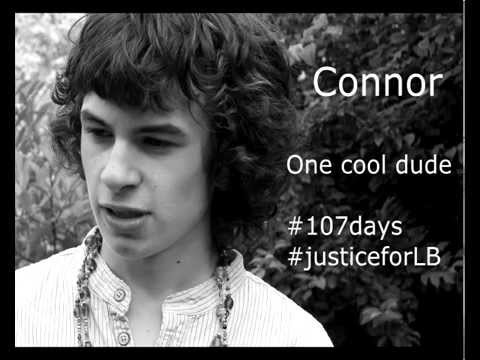 The family had tried to hold a person centred review for Connor Sparrowhawk (LB) at the Assessment and Treatment Unit. They wanted to share what was important to Connor (interesting activities, London Buses, Eddie Stobart lorries, artwork and much more) and what was important for Connor (the fact that his epilepsy was getting worse and the support he would need with this). The staff at the ATU had no time for this thinking however, because it was "not the Care Programme Approach" and did not take it seriously. Connor died a needless and avoidable death by drowning in the bath at the ATU, having presumably suffered an epileptic seizure while unsupervised in the bath. You can read more about the circumstances of his death in the Verita report published about it.
 I spoke about Community Circles because this is an idea with immense potential for the future. We've looked at ways we can apply circles of support at scale, by making them simpler to facilitate and by offering really good support to facilitators. We've also looked at really good applications for circles: in care homes for the elderly, at the end of life with hospices, and their use by faith communities with people who have become isolated because of disability, ill health or circumstances.


