Showing posts with label Smull. Show all posts

Tuesday, 29 July 2014

Portland Gathering 2014

This blog has recently had it's 10,000th visitor. That's not bad for a blog that I woefully neglect and update far too infrequently. I'm using this success to motivate me to write here more regularly.

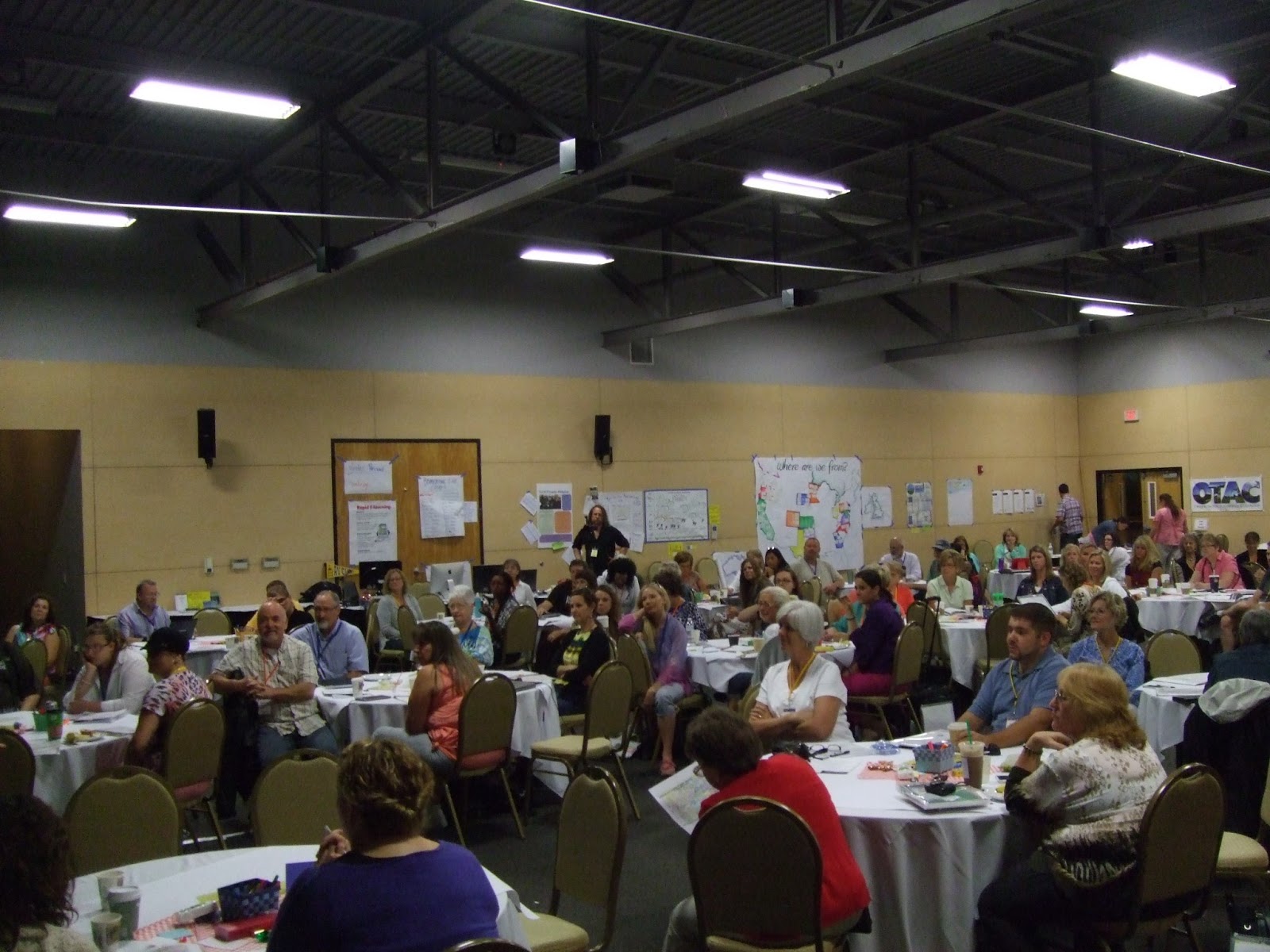
I spent last week in Portland, for The Learning Community for Person Centered Practice's gathering in Portland Oregon. There's a good video that interviews some of the participants here:


I gave three presentations there. One was on the Justice for LB campaign, one was on writing really good One Page Profiles, and one was on the work of building community circles in the UK.

I chose these topics, because I felt they were the most important things happening in the world of person centred practices in the UK that the delegates at this conference in the US should hear about, for different reasons.

I felt it was vital for people to hear about Justice for LB, because it's a story that illustrates just how vital it is for services to listen properly to people and their families, and the potentially tragic consequences of failing to do this.
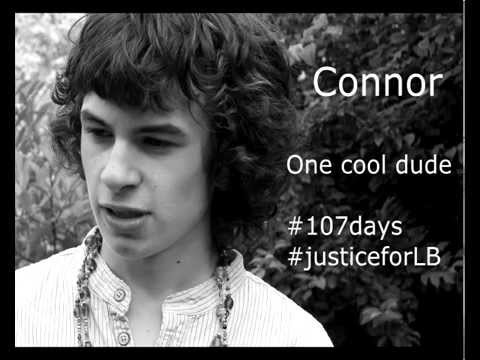
The family had tried to hold a person centred review for Connor Sparrowhawk (LB) at the Assessment and Treatment Unit. They wanted to share what was important to Connor (interesting activities, London Buses, Eddie Stobart lorries, artwork and much more) and what was important for Connor (the fact that his epilepsy was getting worse and the support he would need with this). The staff at the ATU had no time for this thinking however, because it was "not the Care Programme Approach" and did not take it seriously. Connor died a needless and avoidable death by drowning in the bath at the ATU, having presumably suffered an epileptic seizure while unsupervised in the bath. You can read more about the circumstances of his death in the Verita report published about it.

The people who came to this session were visibly moved by Connor's story. They told me that on occasions where this kind of thing happened in the US, the company involved would generally be put out of business, either by quality inspectors, or by the cost of the damages they would have to pay out.

The key issue was that the family had the answers all the time. They knew about the support Connor needed, and they knew that person centred approaches like the person centred review were the way to think together about, plan and deliver the support he needed. All that was needed was for the service to listen to Connor and his family.

"Good support starts and ends with listening. Listen to the person. Listen to the people who know the person best. Listen again. Ask questions, keep listening. When you finally think you’ve heard enough, you’re wrong. Listen more".

I've written previously in this blog about the Winterbourne View Concordat, Justice for LB, and how person centred approaches could be part of helping people get out of Assessment and Treatment Units and into the community.

I talked about One Page Profiles because they are proving to be such a brilliant way of introducing person centred change into individual people's lives, and at scale across services. There was really warm applause for the 100 One Page Profiles blog, which was seen as a real asset for person centred practitioners, both as a source of stories, a repository of great examples of the best one page profiles, and as an illustration of the breadth of applications for this person centred thinking tool. Michael Smull told me personally that he considered Helen Sanderson's work on One Page Profiles to be just as brilliant as anything he himself had ever come up with, "and that's speaking as someone with an ego the size of mine".

I spoke about Community Circles because this is an idea with immense potential for the future. We've looked at ways we can apply circles of support at scale, by making them simpler to facilitate and by offering really good support to facilitators. We've also looked at really good applications for circles: in care homes for the elderly, at the end of life with hospices, and their use by faith communities with people who have become isolated because of disability, ill health or circumstances.

The board of the TLCPCP later agreed that the principles that make circles work, shared in my presentation could potentially also be used as principles with which the Learning Community itself could reframe itself as a growing international community of practice; we could become a global circle sharing our learning together. This is really exciting news, and something I'll be thinking and talking about a lot more in the months to come!

A really big highlight of the Gathering for me was meeting Angela Amado, a leading figure in the field of creating inclusive connected communities, for example I really admire this manual on connecting people with disabilities with their local communities. It was great to tell her about some of what Connect4Life has been doing in central Lancashire.

Overall the gathering was a great opportunity to meet a room packed full of real leaders, ideas people and creative change makers: people full of energy and experience, with a determination to change the system, who have certainly boosted me and made me feel optimistic about the prospects for helping many more people gain choice and control in their lives.

Wednesday, 22 January 2014

The plight of the systematiser

Can humanity assert itself in the face of the systematising power of markets and bureaucracy?

Can our human services organisations genuinely personalise the supports they offer in a way that makes sense to the people they serve?

Will person centredness always be struggling in the spaces it makes in small cracks and corners of the system, always in peril of being abolished by the swipe of some bureaucratic pen?

The inimitable John O'Brien recently released a new paper: "The trouble with person centred planning". In it he explores the tension between "lifeworld rationality" and 'system rationality'.

Lifeworld rationality being those ways of thinking that lead to lives that make sense for individual people, whose subject matter is building and enjoying relationships, dialogue between subjective individuals aimed at mutual understanding and change, the everyday components that go to building good days and good lives and characterised by appreciation of individual gifts and contribution and a celebration of the person's unique identity.

'System rationality' being the ways of thinking encouraged by the driving forces of market and bureaucracy that coordinate, standardise, regulate the ways we work, aiming for efficiency, and characterised by indifference to individuals and uniformity in approach.

It's a tension that everyone who has tried to implement person centred change, in the life of an individual, the work of a whole service or the culture of a whole sector has experienced. Part of person centred work is to 'part the veil of indifference' that John describes, showing how a system's standard practises, policies, structures and assumptions are underestimating and limiting the people they support.

Sometimes I feel John sounds quite pessimistic in his article, he describes the society we live in as the most completely systematised in the history of humankind, with tendrils of the market and bureaucracy insinuating themselves into everyday life, commodifying and regulating every aspect of our existence. He says that the plight of those advocating and practicing person centred approaches is that they can never fully overcome "the colonising forces of system rationality" though he does celebrate the space that person centred approaches have managed to carve despite these forces and seeks ways to defend and extend these spaces where people can be present to each other and search together for the conditions that create a good life.

In response to this hint of pessimism I'd suggest that it is not just the personalisers and humanisers, the 'lifeworld rationalists' who face a 'plight':

The systematisers face an equal and opposite plight.

At the heart of the plight of the systematiser, is that their systems are made of human beings. Systems designed on paper are held together by our habits, reinforced by our assumptions. Human beings have powerful minds and hearts, they are able, (sometimes with the help of a few good questions) to think outside of the systems that contain them, to sense the changes that need to happen.

There's something about humanity in that it resists regulation, commodification and standardisation, especially when it is provided with the tools to do something different, allowing what Michael Smull calls 'positive discontent' to manifest itself as change.

The most ironic plight of the systematiser is that their systems usually don't work UNLESS human beings find other ways of acting and connecting with each other beyond those prescribed in the policy and procedure manuals.

It's clear that oftentimes this resistance to systematisation manifests itself very negatively, especially when it takes the form of  'cynical discontent'. The most regulated and systematised environments are the ones where the darkest abuse tends to occur. Locked doors, walls, protocols and procedures do not keep people safe. The human relationships that all those things are preventing are what keep people safe.

When people are given positive tools and approaches that help part that veil of indifference, even for a moment, it's surprising how easily and joyfully humanity can break through. I loved this little vignette from a hospital ward posted just yesterday on facebook by Jo Harvey:

"Last week I spent two days working at London Road Community Hospital in Derby on our personalisation programme. We are working to introduce one page profiles for patients and staff, more inclusive MDT meetings and working together for change. One of the simple but effective things we are introducing to improve the patient experience is to ask each patient each day what would make a good day for them. This week when we were reviewing how the start of the programme has gone, one ward sister shared a story of how a patient had said that it it would make a good day for him if he could see the staff dance. So they did! Lots of smiles on that day. Simple but effective!"
This story reminded me of Emma Goldman's quote "If I can't dance to it, it's not my revolution".

Person centred thinking tools aim to find big and small ways to part the veil of system indifference - using a one page profile to seek to learn and list everything that people appreciate about a person, everything that really matters to that person is an attempt to do this.

Being willing to share your own one page profile with others creates opportunities to create relationships that are based on more than transactions, offering insights into what may be shared common interests and other ways of connecting.

Matching up people with staff with the right personality characteristics and shared common interests creates new ways of working and being. Linking people into their communities and finding ways with them that they can contribute to the community creates new opportunities for relationship. Creating organisational cultures that value intentional listening, listening to understand, and demonstrably value it when people act on that listening creates whole new possibilities for change.

 
I love this photograph of a temple from Thailand; just as humanity, given the opportunity bursts through systematisation, this tree has somehow both destroyed and preserved the temple it has grown around. It's taken a dry, abstract and formal structure and turned it into a living, breathing entity, rooted in nature. I wonder whether we can change organisations and systems in the same way, by allowing humanity, and the power of human relationships to really take root, in those little cracks in the system we open up every time we use person centred approaches to appreciate and listen well to people?

Sunday, 1 December 2013

Michael Smull on One Page Profiles

Michael Smull speaking in Texas
Michael Smull sent out the following message to people on the Learning Community for Person Centred Practices general mailing list today, he's given permission for us to share it.

"In our efforts to support people in have lives of their own choosing within their communities we have developed an array of practices, skills, and tools. Notable among them are 1 page profiles.  They are both powerful and remarkably useful.  They have made significant differences in the lives of people and have been a critical part of making positive changes in practices.  One page profiles are not meant to be a complete picture of a person, rather they are a snapshot that introduces the reader to the person, outlines what matters most to that person and gives the top tips for support.  Part of their power is in their brevity and that, done well, they are visually attractive.  They are a powerful “tool” in changing how people are perceived and supported.  But they are not powerful simply because they exist but because of their impact.  People who use services, their families, and those who support them have given us story after story about how they have helped in their efforts.  For some people part of what was powerful was the learning that that takes place in development.  For many others it is how effective they are in introducing someone and advocating for them. 

 
A test for something being person centered is that it works for humans.  If it just works for disability it is clinical.  When we apply this test for 1 page profiles we see that can be helpful in a variety of human circumstances.  My 1 page profile as a trainer (on the learning community’s website) is very helpful for those asking me to do training.  With teams, I have facilitated a process for them to develop 1 page profiles on each other and team members find that they are then more effective in working together.
 
There are so many stories about the efficacy of 1 page profiles from so many places that I find it difficult that anyone paying attention can criticize them as ineffective. This is not to say that they cannot be poorly done or badly used.  They are a means not an end. They are not a “magic bullet”, they are not the only thing that needs to be done to change practices, but they are key part of what I teach and coach.   Criticism of those done badly or done just to be “trendy” is justified and useful.  Broad criticism flies in the face of the reality of their impact.  But that criticism has occurred. The criticism I have seen suggests that we are promoting  one page profiles as an end.  Yet if you read the stories associated with the profiles you see that it is how it was used not just that it exists.
 
Because 1 page profiles are being criticized we need more stories.  If you could take a few moments and share your learning it would be very helpful.  Clearly we want stories that illustrate the breadth and power of their use.  But, because we are learning community, we also want stories that illustrate your learning in what was required to make them useful.
 
Thank you.
 
Michael"

Saturday, 3 August 2013

What is The Learning Community for Person Centred Practices?

Readers of this blog will know that I travelled to Portland recently to participate in a gathering of the Learning Community for Person Centred Practices. I met a wonderful warm group of people who were welcoming and friendly, and who were facing the same challenges that we face in Britain.

After this, I had the great honour of participating in the community's board meeting that took place on the evening after the gathering and on the following day. It was great to sit among people whose work I've studied, and experience the personalities behind the words.

If I was to sum up in one sentence what the Learning Community was about, I'd say it was a place that people who are committed to person centred change, who want to see positive choice and control returned to the lives of people who have had it taken away by impersonal institutions and health and social care systems, can come together to share learning, gain mutual support and promote the very best practices.

The community is based in years of experience of implementing what became 'Essential Lifestyle Planning', and its deconstruction into 'Person Centred Thinking' and 'Person Centred Practices' whose directness, simplicity and practicality opened up person centred approaches to many more people. A key part of its work is gathering together what's being learned about what works and doesn't work in implementing such work, finding out what's most effective at creating positive change in people's lives and inclusion and contribution to their communities.

The learning community is International, being organised in a number of countries, including the USA, Canada, Australia, Britain and now India, and with many connections developing in other countries (I may have missed several out through sheer ignorance).

One of the key dangers person centred practices face is the misuse and perversion of it's language and techniques. All it takes for an organisation to claim it is 'person centred' is to stick this on their website. However organisations and individuals that take the challenge of increasing choice and control in people's lives seriously go far further, working hard with accredited trainers for deep cultural change in their organisations. Person Centredness is a journey on which many have embarked but where nobody has yet 'arrived', it's something we're striving for. TLCPCP therefore has an important role as the guardian of key values and practices that might otherwise be diluted or used as window dressing for what remain institutional and service-centred practices, particularly in a time of austerity where cheap shortcuts look so attractive to those that hold the purse-strings! (In the long, and not-so long run, such short cuts of course usually prove to be very expensive to all involved!)

The TLCPCP helps with this work by ensuring that trainers are accredited, and by renewing commitment and fidelity to the values that motivate person centred change. This is coupled with sharing very practical person centred thinking tools and skills that enable such change at scale. The crucial balance between fidelity to values and work at scale is at the heart of almost every discussion and debate held within the TLCPCP.

Given that TLCPCP is a non-profit organisation with no staff and very limited resources, it has achieved a great deal thanks to the commitment of its members and the warm support of partner organisations. It has aims to expand into new countries and further develop the evidence base for person centred practices, spreading them further and deeper so that choice and control can no longer be usurped from human beings by the systems intended to support them.

The TLCPCP has a lively facebook page and can be followed on twitter: @TLCPCP

Thursday, 25 July 2013

Portland Gathering 2013: Wednesday: Keeping the Fidelity of Person Centred Practices


Michael Smull talking on the history of
 Person Centred Thinking and Practices
 
The theme of Wednesday's session of the Portland Gathering was to discuss how to keep true to the core values of person centred practices.

Shae Dotson and Sherry Anderson began the day, exploring the role of planning in enabling people to live better lives. Shae quoted Antoine de St Exupery: "A goal without a plan is just a wish"

Michael Smull gave a comprehensive account of the history of the Learning Community for Person Centred Practices.

5 common dreams: all from us!
He explored the problem of trying to discover what a person's dreams might be when that person had spent an institutionalised life with no opportunity to develop dreams beyond "to get the hell out of here". Back in the 1980s Michael and his colleagues had been talking to people who had remained 'stuck' in institutions because the information that accompanied them focussed on the most negative and embarrassing aspects of their history, often going back 20 or 30 years.
"These were people who if you read what the assessments said about them you would not want anywhere near you, but if you met them and spent time with them, you knew they were cool"

"The people we talked to came up with 5 common dreams, and we realised that these dreams didn't belong to these people, they were really our dreams for them. They were watching our faces very closely, and trying to help us by telling us what they thought we wanted to hear. We realised that dreams come from experience - from opportunities to get a little taste of something and say "I'd like more of that", so we started to realise that before you get a dream, you need to get a life, so we were grappling with the question "How are we going to figure out how people want to live if they don't have dreams?"

The questions and approaches they developed to answer this question began to form the basis of Essential Lifestyle Planning around 88-89. Michael shared that one parent had told him "PATH got my daughter her apartment. ELP got my daughter her life in that apartment", showing how the two approaches complemented each other.

Michael recounted how implementing ELP however was not plain sailing, and had several 'false starts', including many states trying to implement ELP without any training for those who would put plans into practice, imagining that plans could be 'self-implementing'.

He also discussed the difficulty of finding ways to teach ELP beyond simply demonstrating it and expecting people to copy. Here the work of Bill Allen, who introduced a whole range of teaching exercises and new tools that we now refer to as the 'discovery tools' was crucial.

By 2001 however they began to realise that there was still a major problem with implementation: In reality only a pretty small percentage of people needed to know how to write an ELP, but 100% of people needed to know how to implement a plan - how to make sure that what we learn is important to a person is present in their lives.

This led to the development of what we now call 'Person Centred Thinking', ELP was 'deconstructed', being broken into smaller and simpler skills that people could build into their everyday work, and processes like Person Centred Reviews.


Shea Dotson scribing
Alongside this it became obvious that it was absolutely necessary to involve families in planning, Mary Lou Bourne holding the first families planning together sessions with Shelley Dumas, and Sue Cullen developing approaches to enable people that use services to write their own plans.

The practices have spread out to other areas, including schools, older people, mental health services, and many other groups of people and internationally to the UK with Helen Sanderson, Canada, Australia, Europe and now India.

World Café Question
As these processes, tools, skills and learning have been developed, all intellectual property rights have been given to the Learning Community for Person Centred Practices, a not for profit organisation, and lots of people are generously feeding their learning and resources into this pool of practice knowledge, such as Helen Sanderson who is collecting examples of great one page profiles and Nancy Mills who has built a website. "Our vision for the TLCPCP is to build a worldwide hub to share learning" said Michael "This would be easier if we had staff, but we don't".

Michael said that we need to be clear that Person Centred Thinking is "Not THE answer, but part of the answer". "We're still wrestling with how to move from "Power over" to "Power with" and how we form the partnerships necessary to achieve this".

The day went on to use World Café to think about the role of planning in enabling choice and control in people's lives, in the knowledge that the future is likely to be as challenging and full of change and new learning as the past.

We moved from table to table discussing these questions with new sets of people. There was a lot of discussion around the tendency for organisations and states to find ways to dilute or pervert the essence of planning. In the feedback the loudest round of applause went to the delegate who said "The role of planning is whatever it needs to be as defined by the person receiving supports"

The next section of the day was spent in a variety of breakout sessions. I went to the 'People Planning Together' session and was blown away by the quality of a curriculum that is enabling learning disabled people and other self advocates to become trainers in person centred thinking in their own right. Some of the discussion here was around what was required of a trainer, and ways of overcoming issues of communication, such as people who don't use words to speak.

One new thing I learned was the signs for 'important to' (hands clasped close to the heart) and 'important for' ( a wagging finger).  Eddie asked us to make collages representing what was important to us, leading to a rich discussion over what worked and doesn't work in training from the experience of trainers, and the experience of learners.

From my point of view, the importance of the day's theme was given acute counterpoint when I read about the treatment of the son of this BBC blogger who was unlawfully detained in a care unit:

"One of the unit's ideas was that he should have a person-centred plan. He had to create a wish list, and came up with six things:

  • Live at home with Dad
  • Go on holiday to Somerset
  • Have Christmas presents at home
  • See Toy Story 3 at the cinema
  • Have breakfast in the bacon shop
  • Go swimming at Hampton open-air pool

All six wishes were refused because they were not considered to be in his best interests. To me, that's not a person-centred plan, that's a system-centred plan."

Every example of this kind of perversion of person centred practice generates cynicism and pessimism. One key role of the Learning Community for Person Centred Practices is to ensure that a community of practice exists that is strong enough to ensure that this kind of lip-service to PCP is never considered to be a true representation of the practice, and that the trainers and mentors accredited by the TLCPCP never allow their work to be perverted in this way.